
 Waste Heat, Wasted Methane:
The Case for Integrated Urban Metabolism
Oct 14, 2026 · @John C Burke
Cities throw away two resources they have already paid for: heat and methane. Integrated Urban Metabolism (IUM) captures both by planning heat, power, cooling, waste and water as one system. A new Danfoss report puts the scale of wasted heat in the headlines; this note sets out why IUM is the practical answer.
The scale of the waste
According to Danfoss, about two-thirds of global energy was lost as heat in 2024.
|
Measure |
Figure |
|
Global energy lost as heat, 2024 |
About two-thirds |
|
Expected still wasted by 2030 |
Up to 55% |
|
Uncaptured waste heat, 2023 |
At least 3,100 TWh |
|
Potential global savings from recovery |
Up to €140bn a year |
|
German district heating demand coverable by existing industrial waste heat |
Over 30% |
|
Europe's waste heat, in perspective |
Enough to power Paris for 48 years |
Source: Danfoss report, as reported by Energy Live News, 7 October 2026.
Integrated Urban Metabolism
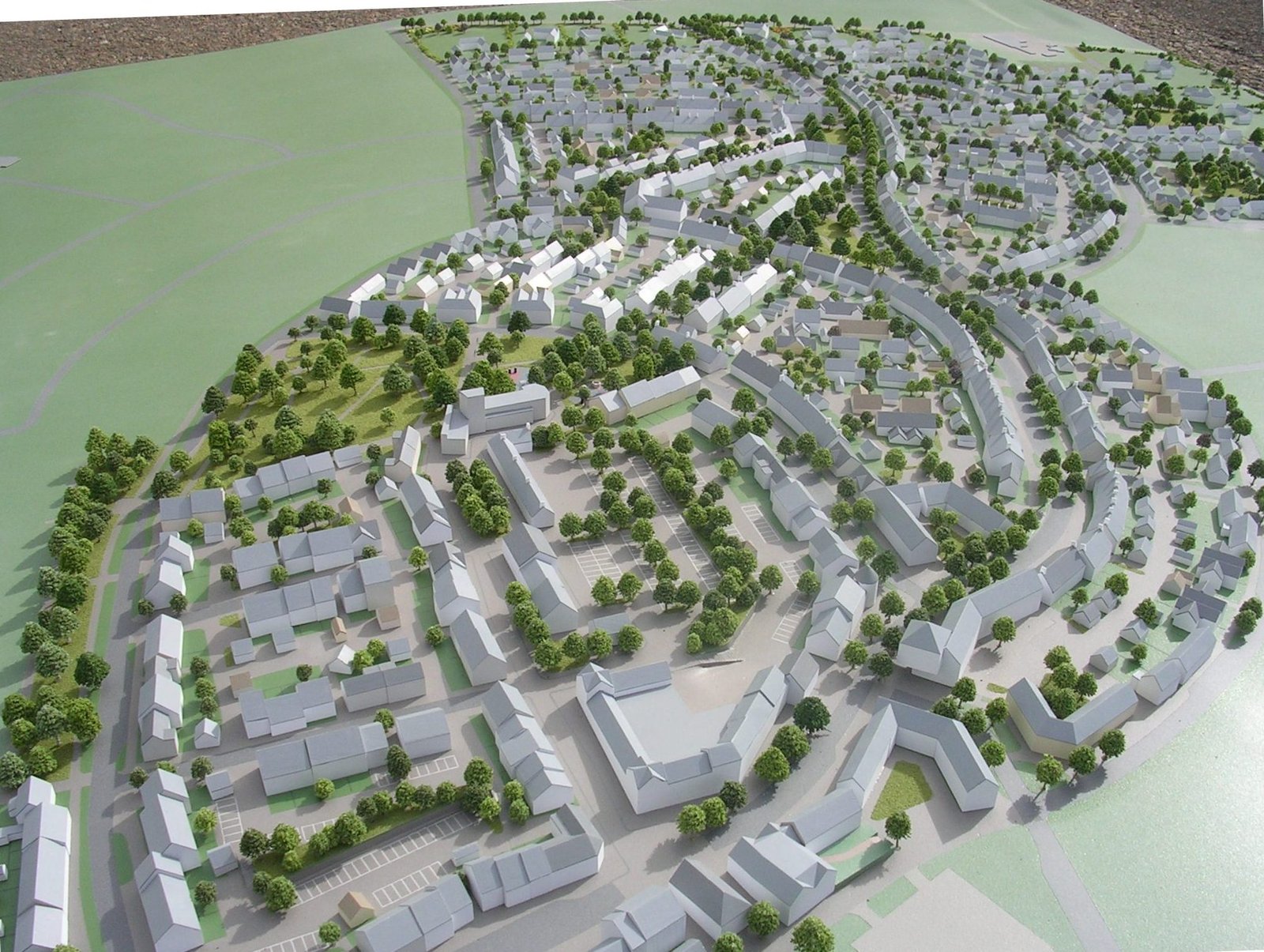
IUM treats a city's energy and waste flows as one system, so what one site throws away becomes another's input.
- Co-location by design.Data centres, industry, sewage works and buildings act as both producers and consumers of heat, linked by heat networks.
- High system efficiency.Combined cooling, heat and power (CCHP) with heat networks reaches roughly 80–90% overall efficiency, against 35–50% for central power-only generation.
- Proven parts, novel integration.CCHP, heat networks, anaerobic digestion and large heat pumps all work today. The gap is planning them together.
- Sound economics.Recovering energy already paid for cuts costs and strengthens resilience, independent of subsidy.
Gas and electricity: the real-world numbers
Electricity is a secondary energy carrier, and its real-world efficiency for heating falls well short of headline figures, most of all at winter peak.
A common claim is that gas burned in a modern CCGT power station (55% efficient) driving a heat pump (COP 3) delivers about 1.6 units of heat per unit of gas. In practice:
|
Case |
Power delivered to home |
Heat pump COP |
Heat per unit of gas |
|
Headline figure |
55% (CCGT at full load) |
3.0 |
about 1.6 |
|
Annual average |
about 45% |
about 2.8 (seasonal) |
about 1.25 |
|
Winter peak |
about 40% |
about 2.0 |
about 0.8 |
|
Condensing boiler, for comparison |
n/a |
n/a |
about 0.9 |
|
CCHP, for comparison |
n/a |
n/a |
about 0.85 total (heat plus power) |
- Power stations: with more renewables on the grid, CCGTs run as flexible backup at part load and cycle on and off. Transmission and distribution lose a further 7–8%. Peak demand also calls on open-cycle plant at 35–40%.
- Heat pumps: air-source units fall to a COP of roughly 2–2.5 near 0°C with defrost cycles, and 1.5–2 at −5 to −10°C at radiator temperatures. Backup electric heaters run at COP 1.
- Two measures matter: seasonal performance (UK field trials about 2.7–3) sets annual energy use and cost; peak COP sets how much grid and generation capacity must be built.
The answer is not gas against electricity but each carrier where it works best. Large water-source heat pumps drawing on sewage or data centre heat have a stable 15–25°C source and hold a COP of 3–4 even in midwinter. IUM puts them inside a CCHP-supplied network.
Figures are approximate engineering ranges.
Bio-methane: the second wasted resource
If waste heat is energy already paid for, so is the methane from our sewage, food waste, farm slurry and landfill. Today much of it is flared, leaked or never collected.
- Anaerobic digestion turns these streams into grid-quality bio-methane that uses existing gas infrastructure.
- Bio-methane fuels CCHP, whose heat feeds the same networks that recover industrial and data centre heat.
- Digestate returns nutrients to farmland, closing the loop between city and countryside.
IUM captures both wasted resources, heat and molecules, in one system.
Questions for policymakers and industry
- Should heat, power and waste stop being separate policy silos and be planned as one urban system?
- What price signals would reward whole-system efficiency, rather than favouring one energy carrier?
- Should connecting new data centres and large industrial sites to heat networks be a condition of planning permission?
- How can connections for waste heat and bio-methane be made simpler and faster?